
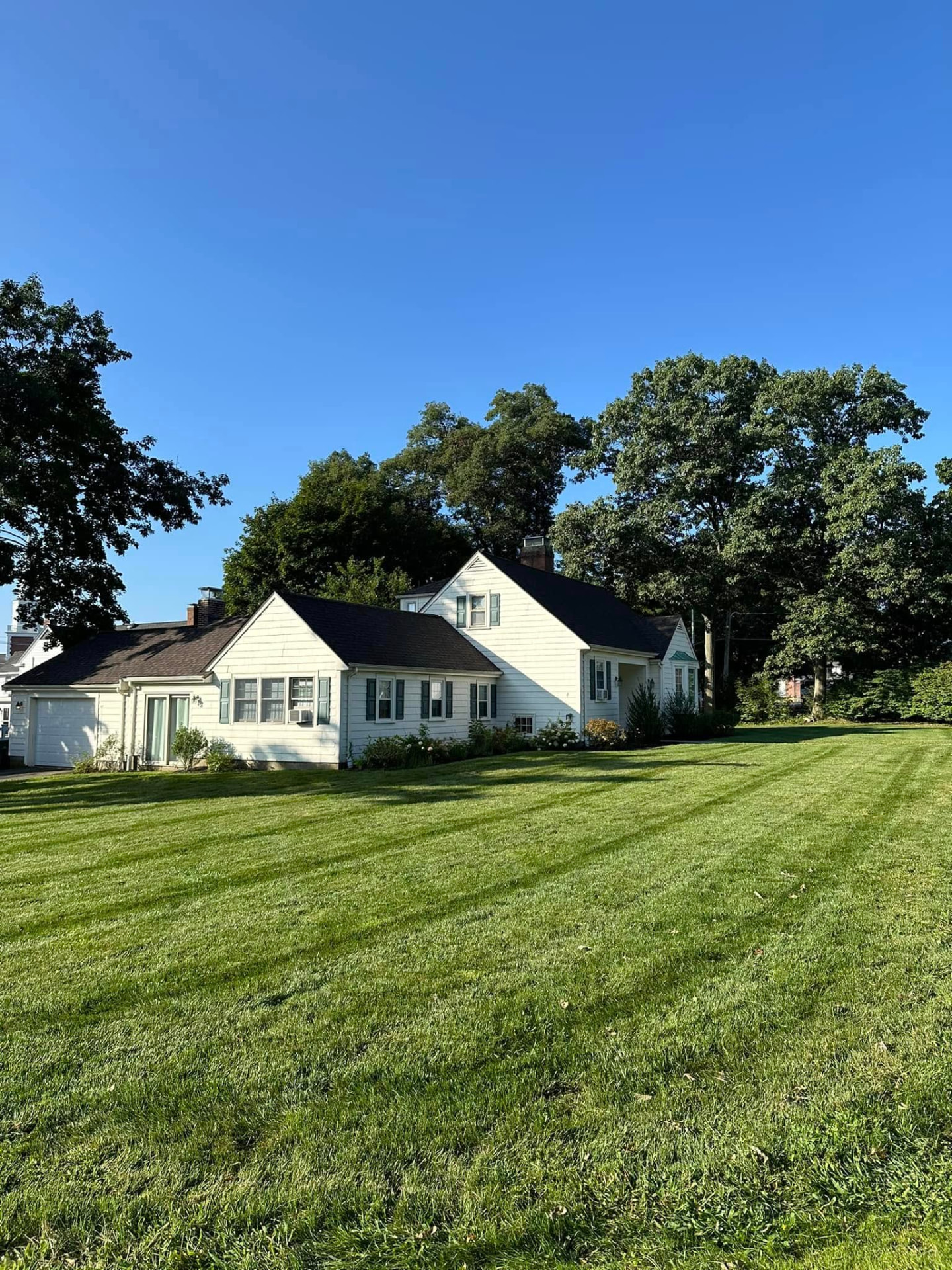
Striped green lawn in front of a Cape style home in Westwood, Massachusetts

Lawn Care · June 2026 · 5 min read

Watering Restrictions and How We Plan Around Them

You cannot grow new grass you are not allowed to water. So we move the work.

Most lawn advice online assumes you can turn on a sprinkler whenever you want. In Norfolk County that assumption breaks by mid-July most years.

Watering rules are the single biggest reason we push seeding work to specific weeks instead of doing it whenever a customer asks.

01

Who supplies your water matters

Dedham and Westwood are both served by the Dedham-Westwood Water District, which sets its own outdoor use schedule and tightens it as state drought levels rise. Norwood runs its own system with an even and odd day pattern. Walpole and Medfield set their own limits too, so two neighbors a mile apart can be under different rules.

02

Level 2 drought is the line

When the state declares Level 2 for the Southeast region, non-essential outdoor watering generally stops. New seed without water is money on the ground, so we do not sell you a seeding job into a ban.

03

Why late August into September wins

Soil is still warm, nights cool off, and rain returns. Seed germinates in a week to ten days with far less supplemental water than a June seeding needs, which keeps you inside almost any restriction.

04

Established lawns can go dormant safely

A brown July lawn is usually asleep, not dead. Cool season grass can sit dormant for four to six weeks and green back up. Cutting a dormant lawn hard is what kills it, so we raise decks and stretch intervals instead.

05

Watering that actually counts

One deep soak of about an inch, early morning, beats fifteen minutes every evening. Put a tuna can on the lawn and time how long your system needs to fill it. That number is your setting for the season.

Not sure which rules apply to your street? Tell us your town and we will tell you what window your lawn is working with this year.

(508) 254-7334
Call