01
Base depth is not a guess
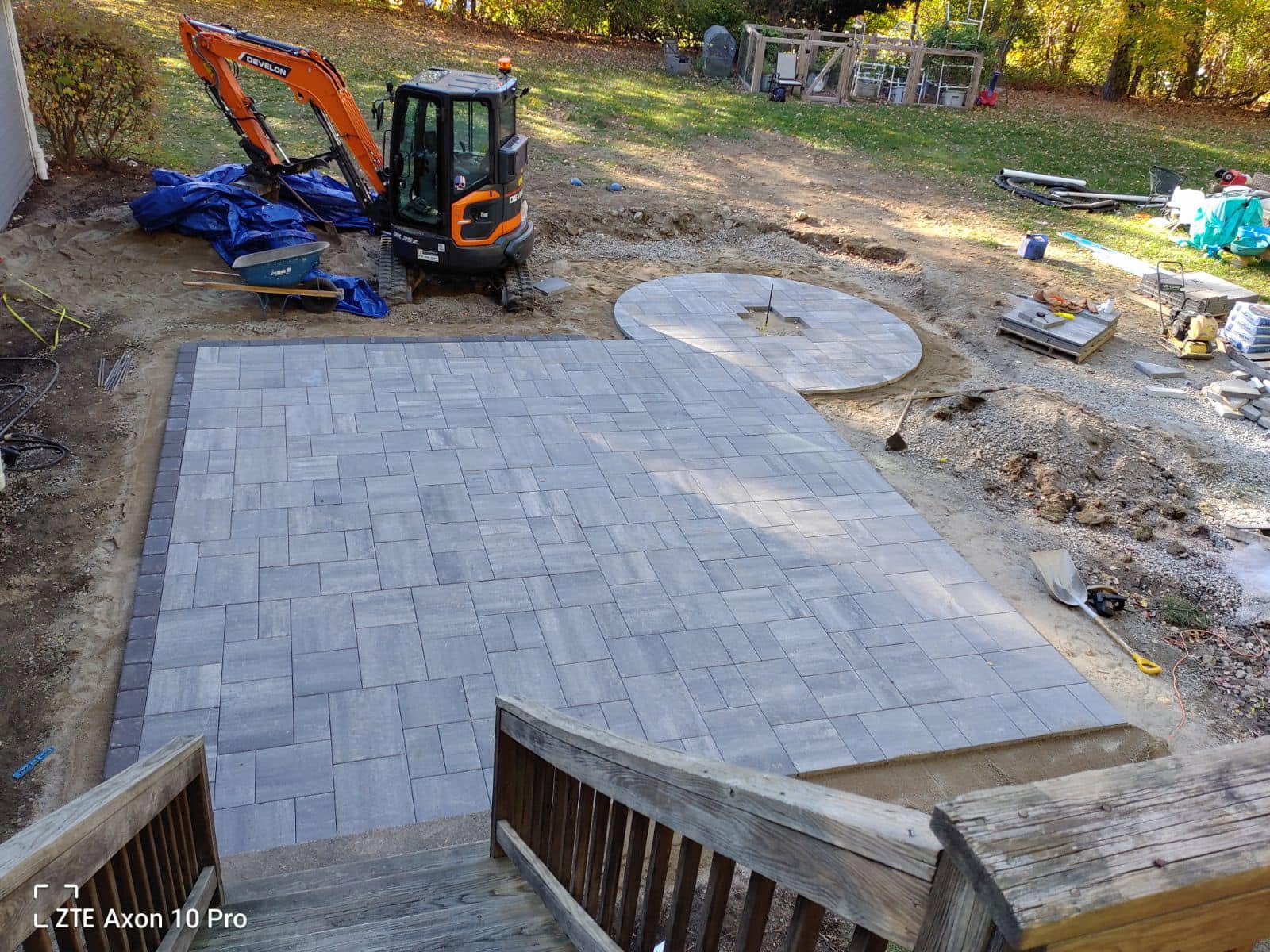
A walkway or patio on our glacial till wants eight to twelve inches of compacted process gravel, and a driveway apron wants more. Cutting that to four inches saves a day of work and costs you the patio.
Hardscaping · July 2026 · 6 min read
Almost every failed patio around here failed below the pavers.
A paver patio is a stack of layers, and only the top one is decorative. When a patio in Norfolk County sinks at one corner or lifts along an edge after a few winters, the pavers are almost never the problem.
Frost drives down about four feet here in a hard winter. Water in the base freezes, expands, and lifts whatever sits on it.
A walkway or patio on our glacial till wants eight to twelve inches of compacted process gravel, and a driveway apron wants more. Cutting that to four inches saves a day of work and costs you the patio.
Gravel gets compacted in layers of a few inches at a time. Dumping the full depth and running a plate compactor over the top leaves loose material underneath that settles the first spring.
Slope the surface away from the house at about a quarter inch per foot, and give the base somewhere to drain. On tight lots near Hawes Brook or in low Dedham back yards we add a drain line, because a base sitting in water will heave no matter how well it was built.
Without a proper restraint pinned along the perimeter, the field spreads, joints open, and sand washes out. It is the cheapest part of the build and the most common one skipped.
Swept joints locked with polymeric sand keep weeds and ants out and keep the field acting as one surface. It needs to be installed dry and watered in properly, which is a weather dependent step, not a same day rush.
Brick or bluestone steps tied to a house need a base below frost or they separate from the entry within a couple of seasons. That is a dig, not a set of blocks on gravel.
Hardscaping is quoted per project after we see the grade, the soil and where the water goes. Send photos and we will tell you what the site is going to demand.